How to manage a condominium reserve fund
Updated
Every building eventually needs repairs and major renovations that come at a significant cost. To make sure that funds are available when they need to be, it’s best practice to save up for these expenses through a reserve fund. It’s not only very useful, but in many countries it’s also required by law.
What the law requires
Most European countries oblige a building’s owners to hold a reserve fund for major works, on top of the money they collect for day-to-day expenses.
What differs is the minimum you have to set aside each year. Some countries base it on a percentage of the building’s ordinary running costs, others on the value of the building itself, and others on a maintenance plan drawn up for that specific building.
Whichever rule applies to you, it’s a floor and not a ceiling. The owners can always decide to save more.
Why you should care, regardless of the law
Even without the obligation, a well-filled reserve fund pays for itself:
- It avoids conflicts between neighbours. Nobody gets an unexpected bill for thousands of euros. The money is already there, so the discussion is about the work, not about who can afford it.
- It lets you act quickly when work is urgent. A leaking roof doesn’t wait for a vote on an extra contribution. With a funded reserve, you can start repairs immediately, before a small problem becomes a structural one.
- It increases the sale value of your building. Buyers and their lenders look at the state of the fund. A healthy reserve is a selling point; an empty one shows up in the price and indicates your building isn’t performing well.
Managing it with Fullhouse
Managing a reserve fund isn’t difficult, especially when you’re using Fullhouse. You don’t even need a separate bank account. With Fullhouse you can create as many funds as you’d like, and a reserve fund is created by default. When money comes in, you can dedicate it to the reserve fund, or transfer a portion into it from another fund.
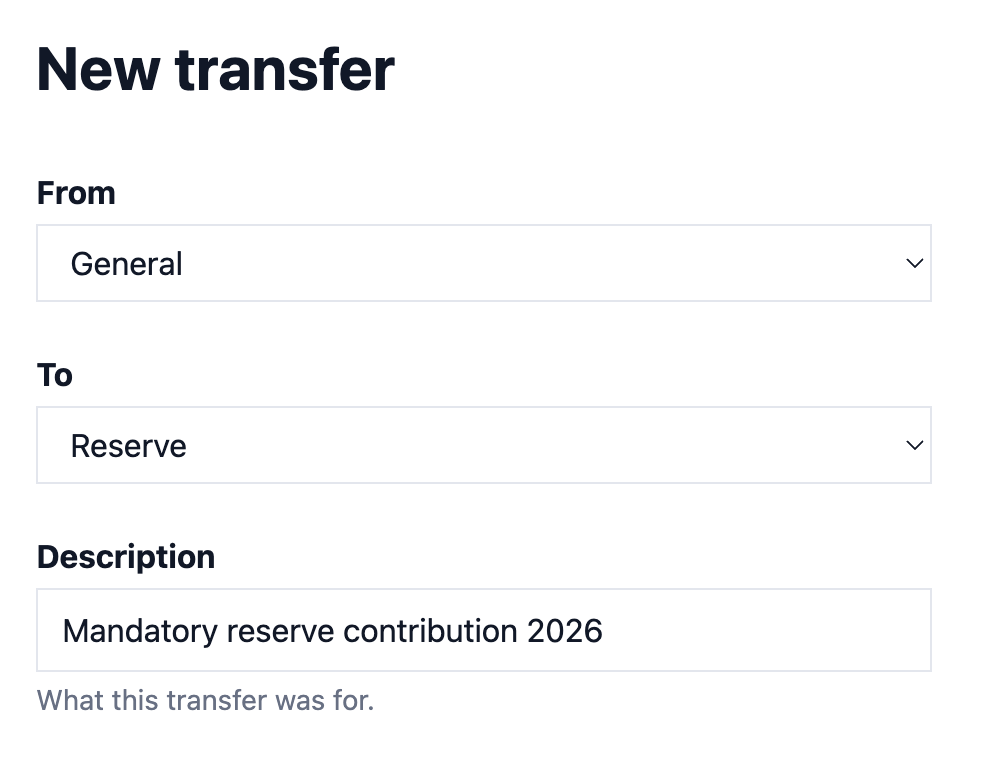
1. Set up a transfer
The easiest way to handle your legal requirement is to create a transfer between your day-to-day fund and your reserve fund.
2. Visibility into your funds
Once your funds start to grow, Fullhouse will visualise where your money lives.

3. Link expenses to funds
When you register an expense, you can link it to the right fund to keep all balances in check.

This article aims to provide you with general information, not legal advice. Rules and regulations vary by building, and region. Always check which rules apply to you and, when it matters, take professional advice.